Return to Main Menu 
Fencing
Timber
Sheds
Decking
Composite
Gates
Garden Accessories
Arbours & Seats
Return to Category Menu
Border & Deck Fence Panels
Concrete Posts & Gravel Boards
Contemporary Range
Decorative Screening
DuraPost®
DuraPost® Urban Composite Panels
DuraPost® Vento Composite Panels
European Panels
European Lattice
Paints, Stains & Preservatives
Paling/Traditional Panels
Postcrete, Accessories & Fixings
Fencing Accessories
Screws, Nails and Fixings
Traditional Trellis
DuraPost® Sleek Aluminium Panels
Post Support Spikes & Bolt Downs
DuraPost® Vista
European Gates
View all
Return to Category Menu
Return to Category Menu
Return to Category Menu
Return to Category Menu
Return to Category Menu
Return to Category Menu
Return to Category Menu
Railway sleepers enhance gardens pleasingly. You can use railway sleepers to build borders, walking paths, raised garden areas, retaining blocks and outdoor steps. Their solid and earthy appearance suits all kinds of gardens - both modern and old-fashioned. But how do you lay railway sleepers correctly to ensure they last and stay in place?
This guide will explain all steps, starting from selecting the best sleepers and ending with permanent installation. This guide gives all the necessary information needed, no matter what your building experience level is.
Why Choose Railway Sleepers for Your Garden?
Railroad ties provide many uses thanks to their long life and strong construction. People select railway sleepers for their projects because they benefit from these advantages.
- Quality railway sleepers preserve their condition for numerous decades if you correctly install them.
- Their untreated, rough look matches perfectly with different garden arrangements.
- Upper rails provide value as steps, elevated planting areas, pathways and landscape borders.
- These materials call for basic tools and simple expertise to work with due to their easy setup.
You can both ground railway sleepers as garden borders and elevate them to build flower beds while gaining their useful and attractive qualities.

Deciding on the Proper Type of Railway Sleepers
You should first pick the ideal railway sleepers for your project. There are two primary choices:
1. Reclaimed Railway Sleepers
These are vintage sleepers that have been taken out of railway lines. They give a weathered, vintage appearance to your garden, but they are very heavy and might be laced with tar or creosote, which can be toxic to plants.
Advantages:
- Naturally weathered look
- Extremely robust and long-lasting
- Perfect for a rustic finish
Disadvantages:
- Heavy and hard to handle
- It might be filled with chemicals
- Can be costly
2. New Railway Sleepers
These are newly cut sleepers constructed from either hardwood or softwood. They are not treated, which means they are safer for use in the garden.
Advantages:
- No chemical treatment
- Different types of wood are available
- Easier to handle and cut
Disadvantages:
- Softwood versions might be less durable
- Hardwood or softwood sleepers might be less characterful when new compared to reclaimed ones
For most garden projects, new hardwood or softwood sleepers are the optimal option. Softwood sleepers are cheaper, but hardwood sleepers are longer-lasting.
Preparation of the Area Before Placing Sleepers
A bit of preparation makes a great difference in making sure your sleepers remain stable and durable for years. Here's what you should do before commencing installation:
1. Lay Out Your Design
- Use stakes and string to mark out where the sleepers will be placed.
- Double-check measurements before cutting or laying anything.
2. Level the Ground
- Remove any grass, weeds, or rubbish from the ground.
- If laying over soil, dig in a little for a firmer base.
3. Enhance Drainage (If Necessary)
- Sleepers do not need to be in standing water, as this will rot them.
- Place a layer of sand or gravel below to facilitate drainage.
4. Collect Your Tools and Fixings
- Heavy-duty screws (if stacking sleepers)
- Metal brackets (for additional support)
- Drill and saw (if cutting sleepers)
- Spirit level (to make sure they are level)
With all prepared, you're now ready to lay railway sleepers in your garden.
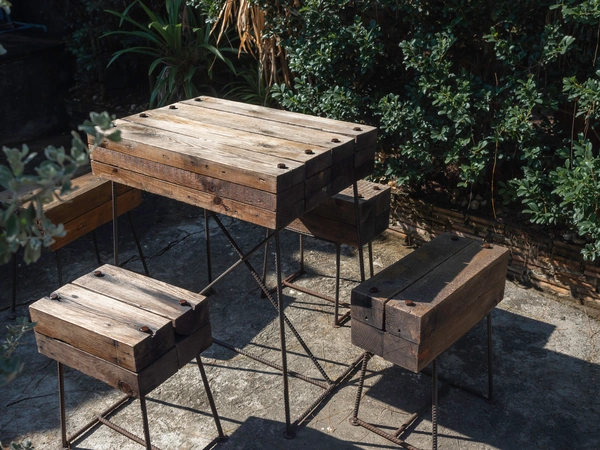
How to Install Railway Sleepers – Step by Step Process
1. Installing Sleepers for Garden Borders or Edging
If you wish to have a garden border, the installation is easy:
- Place the sleepers – Place them flat on the ground in your desired shape.
- Make sure they are level – Use a spirit level and level as required.
- Hold them firm – Nail wooden pegs or metal stakes into the ground to prevent movement.
- Bury halfway (Optional) – For added stability, dig a shallow trench and set the sleepers in place before fixing.
This is ideal for dividing flower beds from grass or paths.
2. Raised Bed Construction with Sleepers
Railway sleepers are perfect for raised beds, providing improved drainage of the soil and a formal planting space.
Steps to Build a Raised Bed
- Lay the first layer – Place the sleepers in a rectangular or square formation.
- Secure the corners – Secure the structure with long sleeper screws or metal brackets.
- Stack more layers – If constructing a taller bed, add another row of sleepers and hold them in place with long screws or rods.
- Fill the bed – Fill with a layer of compost or topsoil, and plant away.
Railway sleeper raised beds are not only functional but look great too in any garden.
3. Fitting Railway Sleeper Steps
Steps cut out of railway sleepers are very strong, long-lasting, and integrate naturally with the landscape.
Steps to Construct Sleeper Steps
- Excavate the area of the step – Each sleeper needs to be slightly recessed into the ground for stability.
- Insert a base layer – A layer of compacted sand or gravel prevents the sleepers from moving.
- Install the sleepers – Place them to create the steps, spaced evenly.
- Secure them – Metal rods or screws can be used to secure them.
Sleeper steps are particularly suitable for sloping gardens, giving both style and functionality.
Care of Railway Sleepers in Your Garden
To keep your railway sleepers in excellent condition, use the following tips:
- Apply a wood preservative – This will keep them dry and free from decay.
- Improve drainage – Do not place sleepers on damp soil. Place gravel underneath if necessary.
- Inspect for movement – After a period, sleepers will move around slightly. Remake them if needed.
- Remove algae and moss – Sleepers will become slippery with water; therefore, clean them by brushing them over a period.
Why Choose Hillsborough Fencing
If you're searching for quality railway sleepers, look no further than Hillsborough Fencing. We provide an extensive range of new and reclaimed sleepers of different sizes and materials. If you're just making a simple garden border or constructing a massive raised bed, we have the appropriate products for you.
Our staff is pleased to offer professional guidance to assist you in selecting the most suitable sleepers for your project. With our high-quality materials and great customer service, you can rely on us for all your fencing and landscaping requirements.
Conclusion
Placing railway sleepers in your garden is an easy yet efficient method to improve your outdoor area. Whether you are constructing raised beds, garden borders, or steps, the procedure is easy with the proper materials and preparation.
By using this guide, you can guarantee your railway sleepers remain secure, last for years, and look great. Select quality sleepers from Hillsborough Fencing, and have a garden that's both functional and fashionable.

Please wait, processing details.